Why do two similar Alexandria homes just a few miles apart command very different prices? The answer often comes down to whether you are inside the Beltway and how that location affects your daily life. If you want clarity on commute trade offs, historic charm, and where your budget stretches, you are in the right place. This guide shows how the Beltway shapes prices in Alexandria and gives you a simple way to compare neighborhoods and make a confident choice. Let’s dive in.
What “inside the Beltway” means
Inside the Beltway refers to areas within Interstate 495 that orbit Washington, D.C. In Alexandria, it is a practical designation tied to commute options and amenities rather than strict city lines. Think Old Town, Del Ray, Rosemont, Potomac Yard, Carlyle and Eisenhower East, Arlandria, and parts of the West End that sit inside or right along I 495. These neighborhoods are closer to regional job centers and transit, which is why they often behave like higher demand local urban markets.
Inside the Beltway typically combines higher baseline prices, faster sales, and smaller lots with richer transit and walkable amenities. Just beyond the Beltway edge, you may find more space and newer homes, but with longer or less reliable commutes.
Why Beltway proximity affects price
Transit access boosts demand
Walkable access to Metrorail is a major value driver in the D.C. region. In Alexandria, stations that matter include King Street–Old Town, Braddock Road, and the new Potomac Yard. Proximity to a frequent transit line reduces commute uncertainty and widens your lifestyle choices after work. To visualize your options, review the regional lines on the WMATA Metrorail map.
Commute time and reliability
You care about door to door time, not just distance. Inside the Beltway routes can clog during peak hours on I 395, I 495, and U.S. 1, which raises the real cost of driving and gives transit served homes an edge. For context on traffic patterns and hotspots, see VDOT’s congestion information for Northern Virginia. If you must be in office several days a week, shaving even 10 to 15 minutes each way can change how you value a location.
Airport convenience
Many Alexandria neighborhoods sit minutes from Reagan National Airport. If you travel often, that convenience can tip your decision toward a Metro connected or close in address. Explore services and access details on the Reagan National Airport information page.
Housing stock and supply constraints
Historic character limits new supply
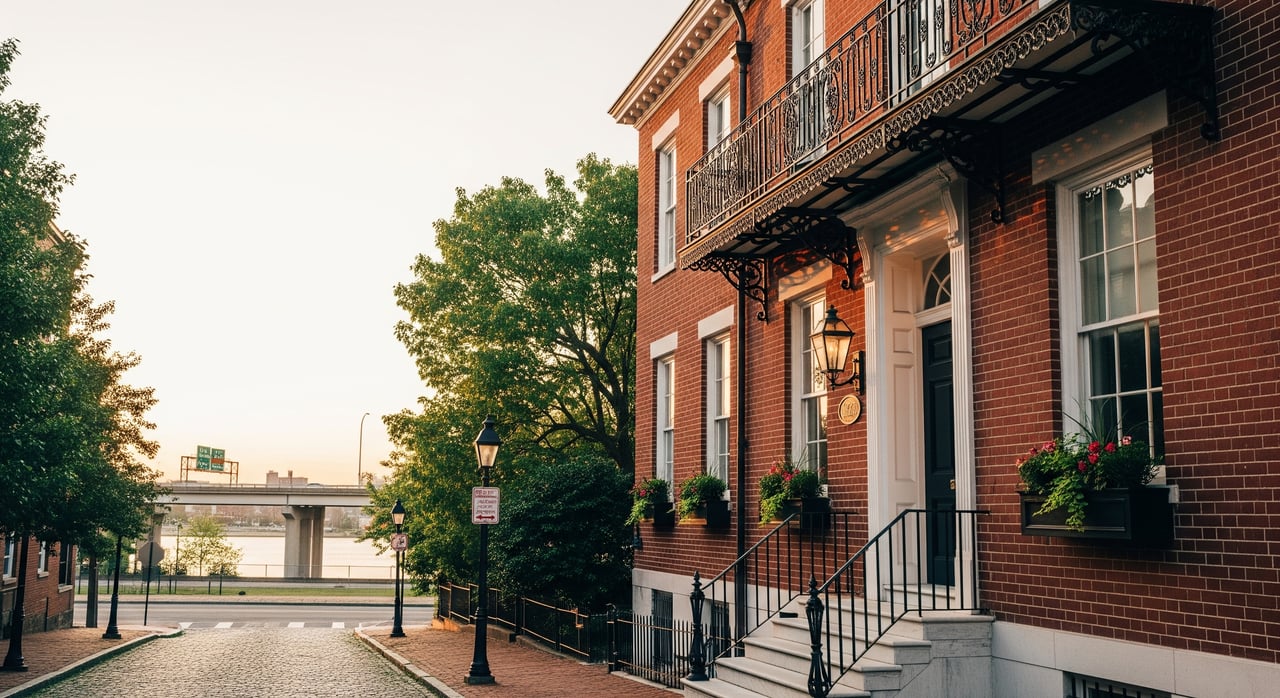
Alexandria includes large historic areas, especially Old Town, where local preservation rules guide what owners can change on exteriors. These protections help maintain architectural character and limit large scale redevelopment, which supports price stability in protected pockets. For background, review the city’s Old and Historic Alexandria District.
Zoning and small area plans
City planning shapes where new homes can go. In recent years, redevelopment in Potomac Yard and Eisenhower East added condos and townhomes, anchored by transit and mixed use design. For specifics, see the Potomac Yard plan and the Eisenhower East Small Area Plan. Many central neighborhoods remain low rise with limited capacity, so inventory stays tight when demand is strong.
What this means for competition
Limited supply plus sustained demand leads to faster market times and stronger sale to list ratios in walkable, inside Beltway neighborhoods, especially near Metro and active retail corridors. When a scarce home type hits the market, buyers notice.
Submarket patterns to expect
- Old Town: High walkability and historic homes with smaller lots, plus infill condos and townhomes. Expect strong premiums for character and access.
- Potomac Yard, Carlyle, Braddock area: Newer buildings, mixed use settings, and strong transit access. Price per square foot often exceeds more suburban pockets due to convenience and amenity density.
- Del Ray and Rosemont: Established neighborhoods with a mix of detached homes and townhomes, active local retail, and near central location.
- West End and Seminary Hill: More varied product, sometimes larger lots and newer construction compared to the historic core, with trade offs in commute time.
- Near Beltway edges toward Fairfax County: More space and newer builds for the money, but with longer or less predictable commutes depending on route and mode.
How to weigh commute, space, budget
Core variables
- Commute cost: Estimate door to door time on in office days and compare drive versus transit during peak hours. Give extra weight to reliability.
- Space needs: Bedrooms, a dedicated office, storage, yard, and parking. Decide what must be inside your four walls versus what nearby parks and amenities can cover.
- Budget elasticity: Set a hard cap and note premiums for Metro walkability and historic character. Compare price per square foot across your short list.
- Resale and liquidity: Transit served central areas often attract broader buyer pools and sell faster, which can matter if you plan a shorter ownership horizon.
- Lifestyle and amenities: Walkability, dining and retail, parks, school boundaries, and airport access.
A 3 step decision workflow
- Fix three non negotiables: maximum commute time, minimum home features, and your hard budget cap.
- Create trade off tiers: A) Inside Beltway and close to Metro to save time and gain amenities, likely with less space. B) Near in areas that balance size and access. C) Outer suburbs for maximum space in exchange for commute time.
- Score neighborhoods on commute, space, budget, and resale potential. Prioritize your top two variables and use them to break ties.
Quick prompts for your situation
- In office 3 or more days per week with a sub 30 minute target: Focus on Metro walkability or easy I 395 access inside the Beltway.
- Need three bedrooms plus a yard on a defined budget: Consider West End or near Beltway edges where square footage stretches further.
- Frequent traveler: Look at Potomac Yard, Old Town, or Carlyle for fast access to DCA and multiple commute modes.
- Shorter ownership horizon or investor mindset: Favor central, low inventory neighborhoods with strong buyer pools and historically shorter days on market.
What to measure in a CMA
A custom, inside the Beltway CMA should combine pricing comps with commute and zoning overlays so you can see trade offs clearly. Here is what to include:
- Timeframe: Sales from the last 6 to 12 months and active listings from the last 30 to 90 days.
- Comparable metrics: Median price, price per square foot, days on market, sale to list ratio, and months of supply for your target neighborhood and a walk to Metro radius.
- Property match: Bedrooms, baths, lot size, year built, parking, and HOA or condo fees if applicable.
- Commute overlay: Peak hour estimates to the Pentagon, downtown D.C., and Capitol Hill by transit and by car. Regional commute attitudes and behavior are covered in MWCOG’s State of the Commute Survey.
- Zoning and historic overlays: Whether the home is within a protected district or an area with added development constraints.
- Market context: Pull neighborhood level trends from local Real Estate Agent reports like NVAR market statistics to frame demand and seasonality.
Map your short list
Start with a simple map of target neighborhoods and Metro lines. Flag Old Town, Del Ray, Rosemont, Potomac Yard, Carlyle and Eisenhower East, Arlandria, and West End, then mark your commute routes and stations. Cross check redevelopment areas using the city’s Potomac Yard and Eisenhower East plans and confirm any historic district boundaries through Alexandria’s resources. Combine that geography with your CMA to translate location into time and dollars.
Ready to weigh your trade offs with real numbers and current comps? Reach out for a custom inside the Beltway CMA, a targeted neighborhood tour, and a plan tailored to your timeline and budget. Start the conversation with Conor Sullivan.
FAQs
Does being inside the Beltway always mean a faster commute from Alexandria?
- Not always, since peak traffic on I 395, I 495, and U.S. 1 can be unpredictable; transit proximity often improves reliability more than raw distance, and regional patterns are tracked by VDOT congestion resources.
How big is the price premium for Metro walkable homes in Alexandria?
- It varies by neighborhood and property type; use a recent CMA tied to your exact home specs and pull local trend context from sources like NVAR market statistics.
Are historic homes in Old Town more complex to renovate?
- Often yes, since exterior changes in protected areas require review and older systems can raise costs; review guidelines via the city’s Old and Historic Alexandria District.
Can you get more space by looking just outside the Beltway near Alexandria?
- Typically yes, with larger lots and newer construction more common, but you will likely trade for longer or less reliable commutes depending on route and mode.
How has telework changed demand for inside Beltway homes?
- Mixed effects, with some buyers shifting toward more space while others double down on walkability, transit access, and the option of shorter in person commutes, which aligns with trends seen in MWCOG’s State of the Commute Survey.
What local rules can limit redevelopment or expansion in central Alexandria?
- Historic district oversight and small area plans set design, height, and density parameters that can constrain large scale changes; see the city’s plans for Potomac Yard and Eisenhower East for examples.