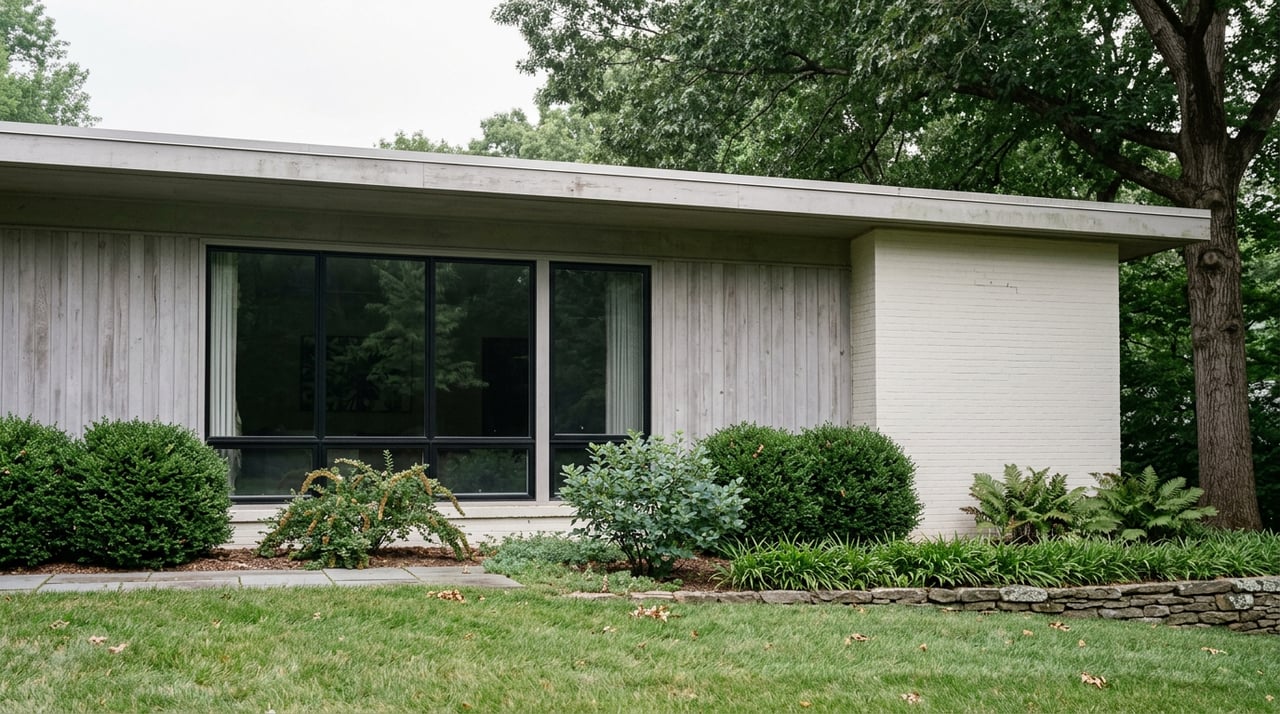
Every listing for a home inside Lake Barcroft mentions the same figure: an annual homeowners association fee of $495. It sounds almost quaint for what it buys, deeded access to a private lake, five staffed beaches, and a community that has been organizing its own Fourth of July fireworks since the 1950s. Compared to condo or townhome association dues elsewhere in Northern Virginia, $495 a year reads like a rounding error.
It is not the whole bill.
Lake Barcroft carries a second, separate charge that never appears in the HOA line of a listing sheet, because it is not an HOA charge at all. It is a tax, assessed by a political subdivision of the Commonwealth of Virginia, and it exists because of a flood that destroyed the lake fifty-four years ago. Understanding why that second charge exists, and what it actually costs at different price points, tells you more about what you are buying into Lake Barcroft than the median sale price ever will.
Two Organizations, One Bill
Lake Barcroft's governance splits into two entities that most buyers assume are one. The Lake Barcroft Association (LBA) is the homeowners association familiar to anyone who has lived under a community association: it collects the $495 annual due, runs the beaches, manages an architectural review committee, and publishes a newsletter. It has governed the community since 1950 and today represents more than a thousand dues-paying households.
The second entity is the Lake Barcroft Watershed Improvement District, or LBWID. It is not a homeowners association. It is a political subdivision of Virginia, created by state law in 1973, with a single founding mandate: keep the dam standing and the lake's water level constant. Its authority does not come from a covenant you sign at closing. It comes from the Commonwealth, which is why its charge shows up on your Fairfax County property tax bill rather than an HOA invoice.
The reason the LBWID exists at all is worth knowing before you write an offer.
- In June 1972, Tropical Storm Agnes dropped record rainfall on the region. Floodwater topped the dam's wooden superstructure and scoured out the earthen embankment at its western end, and within hours most of the lake drained into a pond of a few acres.
- Rebuilding a private lake with private money proved difficult to finance and slower to organize than the community wanted.
- In 1973, Virginia authorized the creation of a Watershed Improvement District, giving Lake Barcroft the power to issue and sell bonds and to collect a dedicated property tax to pay for the dam's reconstruction and its ongoing operation.
That structure never went away. The lake you see today exists because a state-authorized taxing district rebuilt it after 1972, and that same district still collects annually to keep the dam functioning and the water level constant, which by law it must maintain.
What the Second Number Actually Costs
The Commonwealth's 2025 local tax rate table lists the Lake Barcroft Watershed district's rate at $0.111 per $100 of assessed value, layered on top of Fairfax County's own real estate tax rate. That number means nothing until you attach it to an actual assessment, so here is what it looks like at three points along Lake Barcroft's price range.
| Assessed Value | LBA Annual Dues | LBWID Tax (est.) | Combined Annual Cost |
|---|---|---|---|
| $700,000 (typical interior lot) | $495 | ~$777 | ~$1,272 |
| $1,000,000 | $495 | ~$1,110 | ~$1,605 |
| $2,000,000 (waterfront) | $495 | ~$2,220 | ~$2,715 |
These are estimates built from the published rate, not a quote from Fairfax County, and any buyer should confirm the current assessment and rate before making an offer. But the pattern holds regardless of small year-to-year adjustments: the watershed tax scales with assessed value, so it grows fastest exactly where the water views do. On an interior lot a few streets back from the shoreline, the combined mandatory cost of admission runs a little over a thousand dollars a year. On a waterfront estate, it can run closer to three thousand, and that is before the county's base real estate tax, which every homeowner in Fairfax pays regardless of whether they belong to a lake association.
The Exit That Isn't One
There is a second structural quirk worth knowing, and it has nothing to do with tax rates. When the community first organized around lake ownership, some homeowners were given the option to decline membership in the association altogether. A handful took that option. What almost none of them understood at the time is that the decision was effectively permanent. Membership in Lake Barcroft's association is not something you can rejoin on request once you have opted out. For practical purposes, it is a one-way door.
That detail matters for a specific kind of buyer: someone eyeing a home on the edge of the Lake Barcroft boundary, where a similar house across the line in the Sleepy Hollow area shares the mid-century housing stock and the tree canopy but carries no LBA dues and no beach access, because it was never part of the association to begin with. The two homes can look nearly identical on a listing sheet. One comes with a permanent, compounding obligation and a deeded right to use five private beaches. The other doesn't, and never will, no matter how badly a future owner might want in.
The rigidity is not an accident. A community that owns a lake, a dam, and five beaches outright has to prevent free-riding, and making exit costly is how it does that. It also means today's buyer is inheriting a decision that residents from decades ago made on their behalf, one that no closing disclosure spells out in plain language.
What the Market Is Actually Telling You
Sales data covering the three months ending April 2026, the most recent published window available, showed the median home in Lake Barcroft closing around $887,000, a meaningful pullback from the same period the year before, alongside a per-square-foot price near $353. At the same time, the number of active listings in the community rose sharply that spring after a long stretch of tight supply, giving buyers more homes to compare for the first time in years.
None of that changes the arithmetic above. A softer median price does not soften the watershed tax rate or the association dues, both of which are fixed obligations tied to assessed value and membership rather than to whatever the broader market is doing. If anything, a cooling market makes the combined annual cost of admission a larger share of the overall calculation for buyers at the lower end of Lake Barcroft's range, since a thousand-dollar-plus fixed cost matters more on an $800,000 purchase than a $2 million one.
The top of the market has kept moving regardless. A waterfront home on Greentree Drive, built in 1968 with a private dock and multi-level terraces facing the lake, came to market in late July 2026 asking $2.5 million, a reminder that direct water access still commands a price the interior of the community simply does not reach.
Public tax filings offer one more data point worth knowing. For fiscal year 2024, the Lake Barcroft Association reported revenue of roughly $769,000 against expenses of about $815,000, funding the water safety operation, beach maintenance, the private security patrol staffed by off-duty county police, and the community's newsletter and events calendar. That is what the $495 due actually funds. The watershed tax funds something different: the dam that keeps the lake full in the first place.
What This Means If You're Comparing Neighborhoods
Buyers comparing Lake Barcroft to other Falls Church or Fairfax County neighborhoods are usually pricing in the HOA fee and stopping there. The full picture requires two more questions: what is the current LBWID rate against this specific home's assessed value, and does this particular lot carry full LBA membership or does it sit just outside the boundary. Both answers change the real annual cost of ownership by a meaningful margin, and neither shows up in a standard listing search.
Frequently Asked Questions
Can a new buyer opt out of Lake Barcroft Association membership to avoid the dues? No. Membership in the LBA is mandatory for property within the community's boundaries under its governing documents, and the option to decline that existed decades ago for certain original owners is not available to buyers today.
Does the LBWID tax apply to every home in Lake Barcroft, including homes without water access? Yes. The watershed district's boundaries are coincident with the Lake Barcroft community as a whole, so the tax applies based on the district boundary and assessed value rather than proximity to the shoreline, though the dollar amount naturally rises with a higher assessment.
Is the $495 HOA fee likely to change? Association dues are set annually by the LBA board and can be adjusted based on operating costs, so buyers should confirm the current rate directly with the association rather than relying on a figure quoted in an older listing.
Understanding the total cost of a home, not just its list price, is exactly the kind of groundwork that shapes a smart offer in a community like this one. If you are weighing Lake Barcroft against another Northern Virginia neighborhood, or trying to figure out what a specific address will actually cost you to hold long term, Sullivan Brownell can walk through the real numbers with you. Request Your Home Valuation to start with a clear picture of where your target property stands.