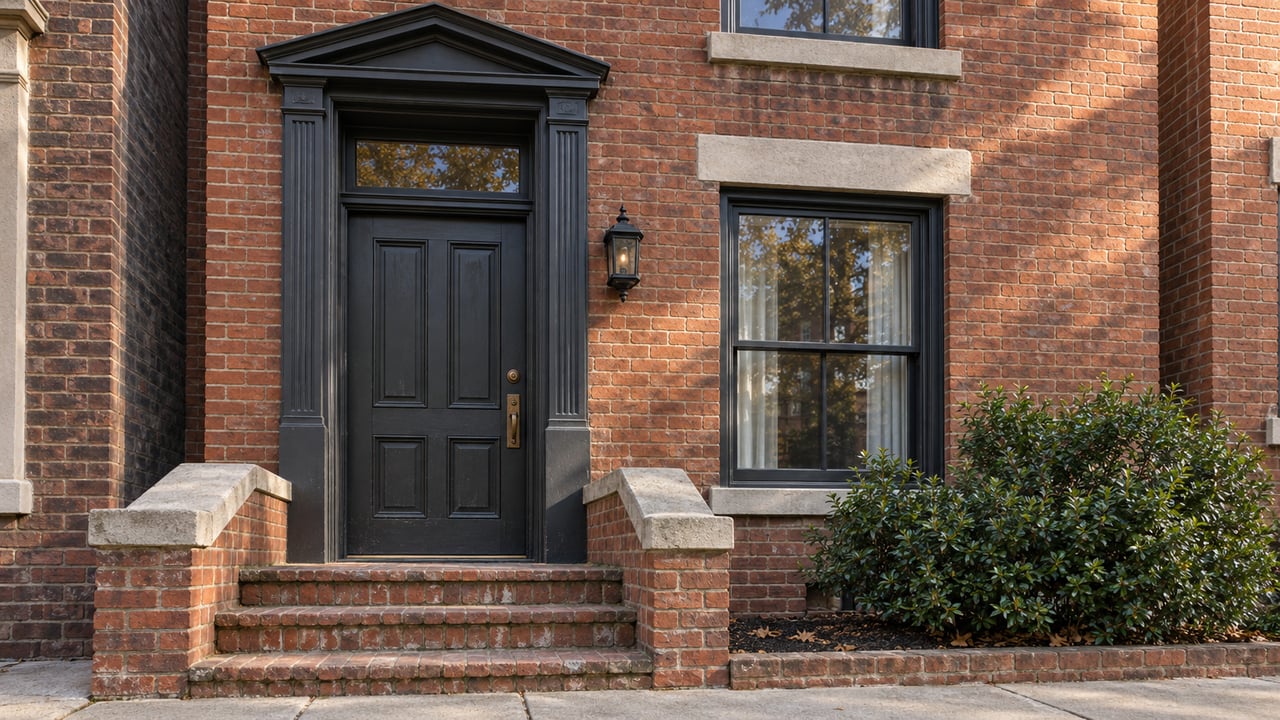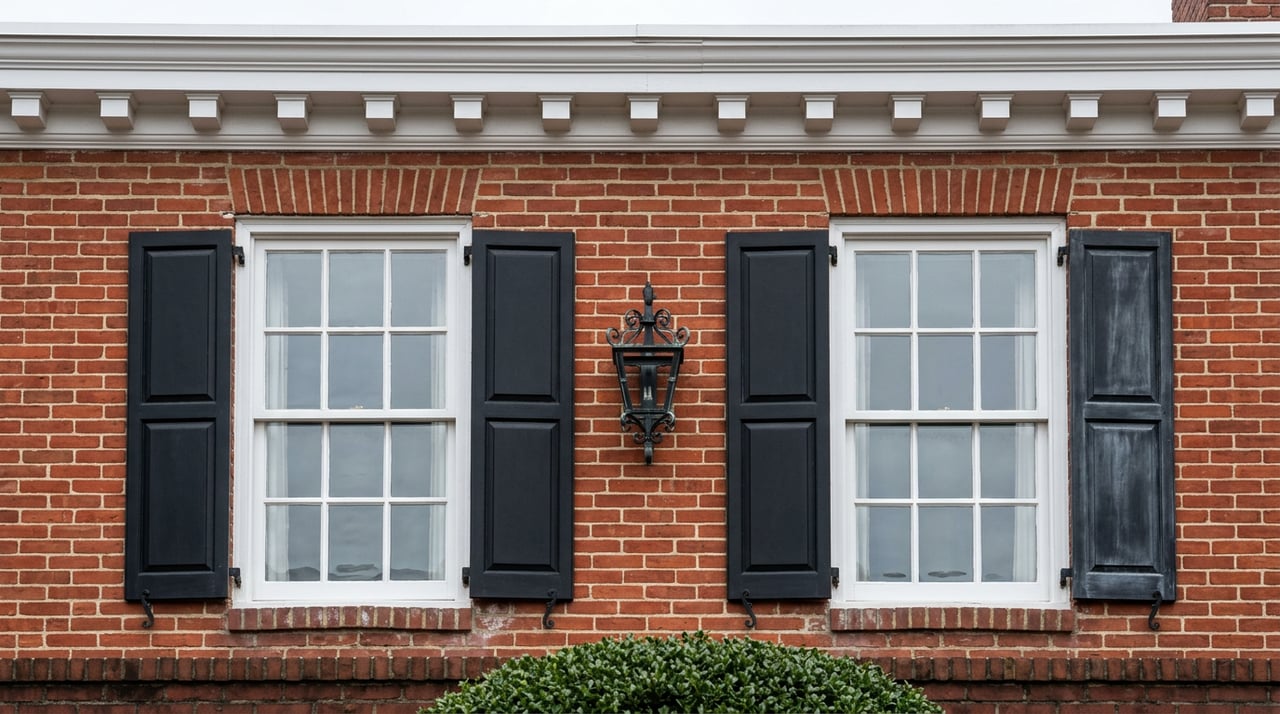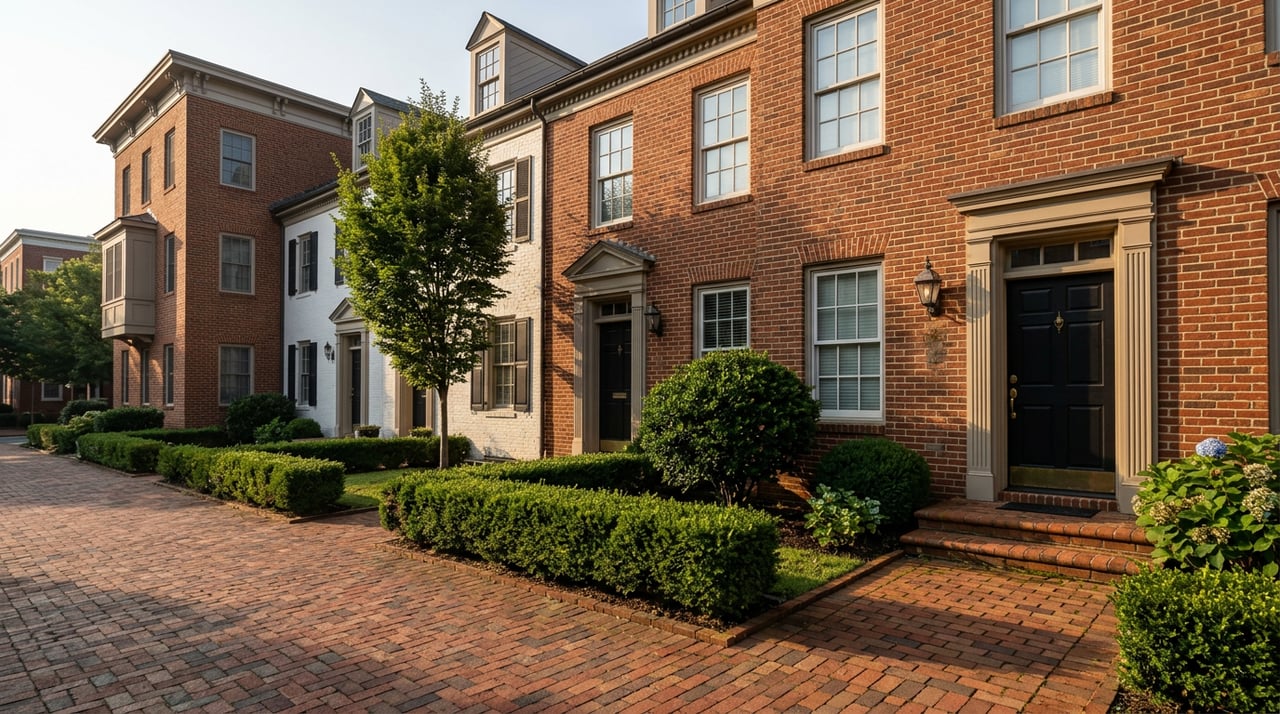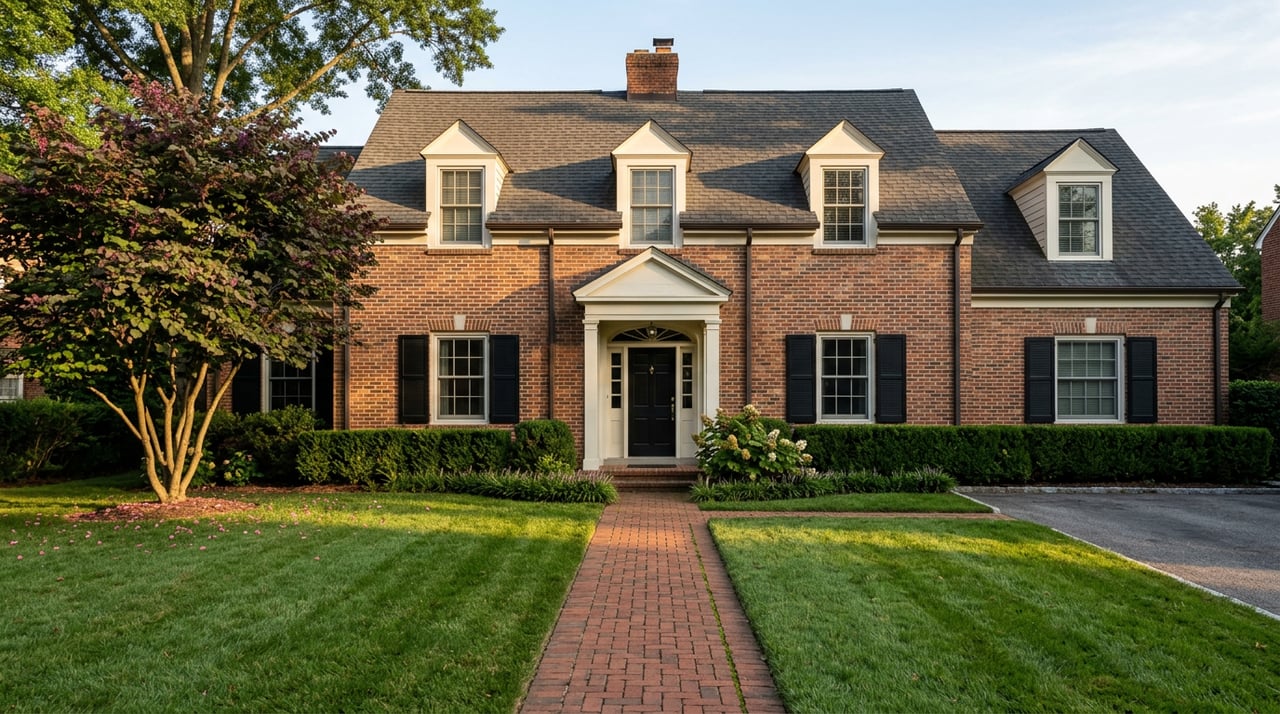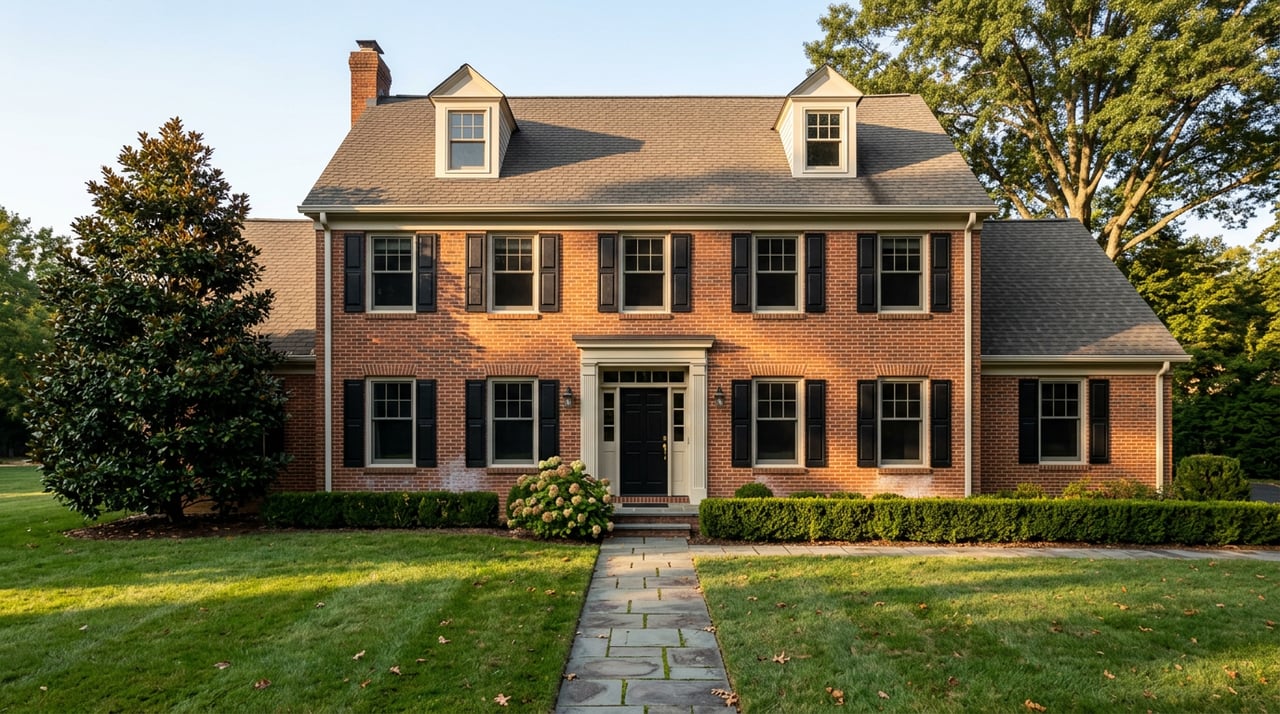
A buyer touring McLean this spring pulled up to two homes twelve minutes apart, both listed within $60,000 of each other, both inside the same zip code. One was a fully renovated four-bedroom colonial with a chef's kitchen and a finished lower level. The other was a 1968 rambler with a galvanized water line, a Federal Pacific panel in the basement, and a half-acre lot backing onto mature trees. Same price band. Same school pyramid. Almost nothing else in common.
That is the thing about a McLean median price. It reads like a single number describing a single market. It is actually an average of two very different transactions happening under one town name, and confusing them is how buyers overpay for a house that was never the point, and sellers underprice a lot that was.
What the Number Doesn't Tell You
Redfin's data for the three months ending May 2026 puts McLean's median sale price at $1.9 million, up 9.7 percent from the same period a year earlier, with homes averaging 19 days on market compared to 26 days the year before. That reads as a market accelerating on every front. But zoom into a single zip code and the picture splits. Zillow's spring 2026 figures showed McLean's 22101 zip code with a typical home value around $1.7 million, while 22102 sat closer to $840,000, roughly half. Same "McLean" address on the envelope. Different market entirely.
The gap is not a data error. It reflects what is actually for sale in each pocket. McLean's housing stock ranges from mid-century ramblers on quarter-acre lots to $20 million-plus estates to new-build condos near Tysons, and the mix shifts every closing cycle. A month with a run of high-end estate sales pulls the median up. A month with more attached housing and older detached homes pulls it back down. The number is real. It just is not describing one product.
The Line Builders Actually Draw
If you want to know what you are really buying in an older McLean home, the more useful number is not the median. It is the renovation-to-replacement threshold that custom builders use to decide whether a house gets updated or demolished. Once renovation costs climb to roughly 70 percent or more of what it would cost to replace the home outright, a full rebuild becomes the more rational path, not the sentimental one. That threshold shows up constantly across McLean's 1960s and 1970s inventory, where aging foundations, boxy floor plans, low ceiling heights, and outdated mechanical systems make a partial renovation an expensive way to end up with a compromised house.
Once a property crosses that line, the sale price stops tracking the house and starts tracking the dirt. Premium McLean lots, depending on size, proximity to Washington, and school pyramid, commonly trade in the $900,000 to $2 million range on their own, before anyone has touched the structure. That is why established neighborhoods like Langley Forest, Franklin Park, Salona Village, and West McLean keep producing teardown activity even as home prices climb: the older houses on half-acre and quarter-acre lots were never really competing on kitchens and bathrooms. They were competing on land.
Meanwhile Chesterbrook holds its value differently, driven less by lot economics and more by sustained demand tied to its school pyramid, where buyers pay a premium regardless of a home's age or finish level. McLean Hamlet, Westgate, and Broyhill Estates sit at the more accessible end of the spectrum, and much of their upside for a buyer depends on whether a given property is priced as a livable home or as a future redevelopment site. Lewinsville, closer to retail and the emerging urban fabric around Tysons, is drawing buyers who want walkability over acreage entirely, a different calculation from the estate-lot math playing out a few blocks away.
Two 2026 Projects Prove the Split Is Real
If the theory is that McLean's market is really two markets stacked into one median, 2026 gave that theory two concrete test cases, one on the land side and one on the exit side.
The first is Knolewood, a 24-lot subdivision rising on roughly 25 acres near the corner of Lewinsville Road and Lancia Drive. County records show a site plan for the parcel was submitted back in December 2023 and completed review in September 2025, and the land, a historic estate with a manor house dating to 1875, has now been fully cleared for construction. What makes Knolewood notable is not the finish level, it is the scarcity: this is the last significant expanse of undeveloped land left in McLean, and there will not be another parcel like it. Three local builders, Artisan Builders, Galileo Signature, and Winthrop Custom Homes, are building on individual lots ranging from 0.82 to 1.2 acres. This is the land side of McLean's split made literal: for the first time in years, buyers can purchase raw McLean land without waiting for an existing house to age into teardown territory.
The second is The Ritz-Carlton Residences, McLean, Tysons, a 102-unit branded condominium project from developer Renaissance Centro, breaking ground in 2026 with completion targeted for late 2028, priced from roughly $1 million. What makes this project relevant to the teardown conversation isn't the marble or the concierge desk. It's who Renaissance Centro says they're building it for.
There's strong demand in Tysons for larger, for-sale units, especially from empty-nesters in McLean and Great Falls who are ready to downsize from their sprawling estates but aren't willing to cram into 1,200 square feet.
That is Renaissance Centro Vice President Ilan Scharfstein, describing the buyer profile behind the project to local outlet FFXnow. It is a direct acknowledgment that a segment of McLean's large-lot owners are actively looking for an exit that doesn't sacrifice square footage, and that a single-level, full-service condo near Tysons Galleria is being built specifically to catch them. When those owners sell, their half-acre and acre-plus lots reenter the market exactly where the teardown math applies most.
Knolewood and the Ritz-Carlton Residences are not competing developments. They are two ends of the same pipeline. One creates new McLean land for buyers who want to build. The other creates an offramp for the generation of owners whose land is the reason a buyer wants it in the first place.
What This Means If You're Comparing McLean Neighborhoods
| Area | What's actually being priced | 2026 context |
|---|---|---|
| Chesterbrook | School-pyramid demand, largely independent of house condition | Commands a premium even in dated homes |
| McLean Hamlet, Westgate, Broyhill Estates | Entry-tier pricing with redevelopment upside | Frequently marketed to both livable-home buyers and builders |
| Langley Forest, Franklin Park, Salona Village, West McLean | Half-acre to quarter-acre lots in the active teardown corridor | Lot economics set the price floor, not the kitchen |
| Lewinsville | Walkability and proximity to Tysons retail | Drawing buyers who want convenience over acreage |
| 22102 (west side, Tysons-adjacent) | Different product mix entirely: newer builds and condos | Zillow's spring 2026 typical value sat near $840,000, roughly half of 22101 |
If you are comparing two McLean listings on price alone, you are comparing two things that only share a zip code. The renovation-to-replacement math tells you whether the house or the land is the real asset. The neighborhood tells you which buyer pool you're competing against.
A Few Questions Worth Asking Before You Compare Numbers
Is McLean's median sale price a useful number for my own search? Only as a rough temperature check. Given the spread between 22101 and 22102, and between school-driven Chesterbrook and land-driven West McLean, the median tells you the market is active without telling you what any specific property is worth. Compare within your target subdivision and zip code, not against the town-wide figure.
How do I know if the house I'm touring is a renovation candidate or a true teardown? Ask a contractor to price a full renovation, including mechanical systems and structural work, before you fall for the floor plan. If that number approaches 70 percent of what new construction would cost on the same lot, you're pricing land, not a house, and your offer strategy should reflect that.
Why is new construction suddenly available in a town that's been fully built out for decades? Two separate forces converged in 2026. Knolewood opened up genuinely new land, the first of its kind in years. And a wave of long-time owners on large McLean and Great Falls lots are being offered a real alternative in projects like the Ritz-Carlton Residences, which will put more of that older, land-rich inventory back on the market as they sell and downsize.
If you're weighing a purchase or a sale in McLean and want to know which market you're actually standing in, whether the number in front of you is pricing a house or the ground it sits on, Sullivan Brownell Partners can walk the specific lot, subdivision, and comps with you before you write an offer or set a list price. Request Your Home Valuation to start that conversation.